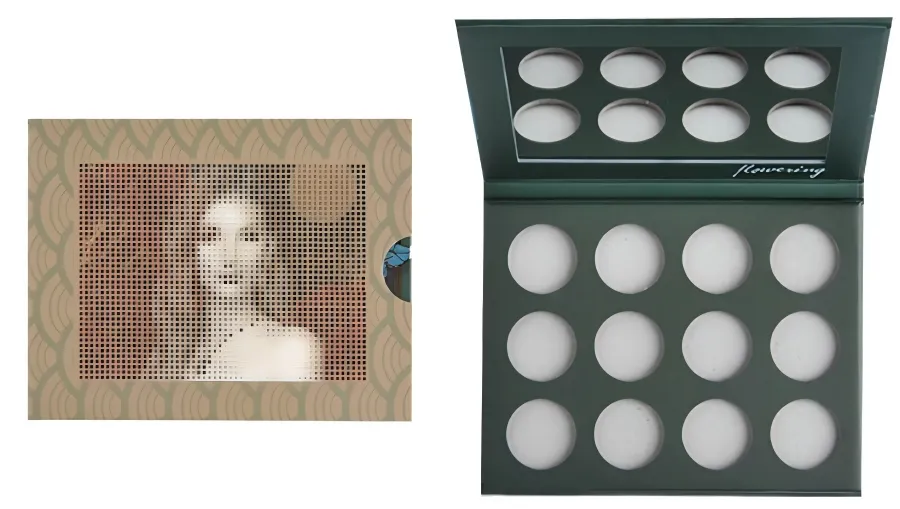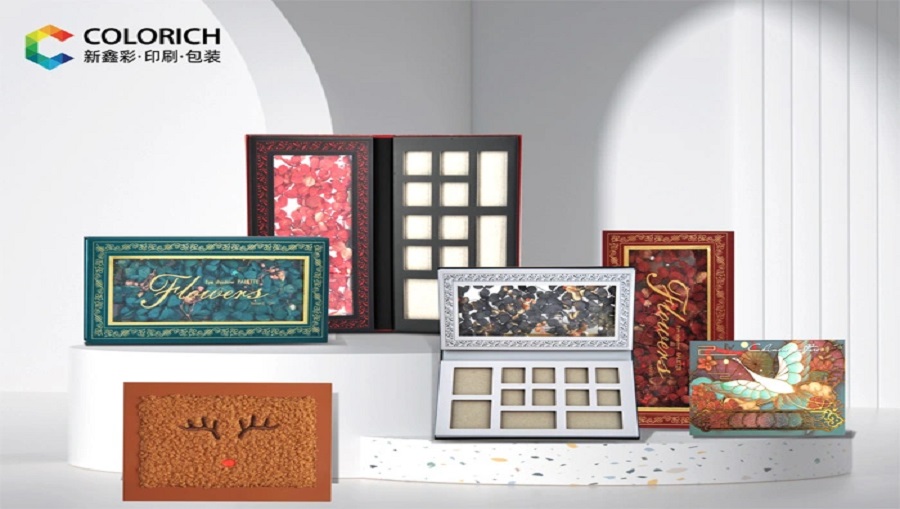

When developing makeup packaging, brands often focus on the outer appearance, printing, and finishing details. However, the internal insert is equally important because it directly affects product protection, presentation quality, and customer experience. A well-designed insert keeps makeup pans securely positioned, reduces damage risks, and helps create a premium unboxing experience.
For cosmetic brands launching eyeshadow palettes, blush collections, or multi-functional makeup kits, choosing the right insert requires careful consideration of product dimensions, material options, transportation conditions, and brand positioning. In professional cosmetic packaging solutions, insert design is usually integrated with the entire packaging structure to achieve both functionality and visual appeal.
The insert is the internal structure that holds the makeup product in place inside the package. Although customers may not always notice it directly, the insert plays an essential role in protecting the product and improving the overall packaging experience.
During transportation and handling, makeup palettes may experience vibration, pressure, or impact. Without proper internal support, makeup pans can shift, powders may crack, and the final product may arrive with quality issues. A precisely designed insert creates a stable space for each component and minimizes unnecessary movement.
Beyond protection, inserts also influence how customers perceive a brand. A clean and well-fitted interior creates a sense of quality when the package is opened. For premium beauty products, the internal structure is part of the brand experience, just like the exterior design, logo printing, and surface finishing.
For manufacturers specializing in custom makeup palette packaging, insert development is not simply about adding an internal layer. It requires understanding the product structure, packaging materials, and the brand’s expectations for appearance and performance.
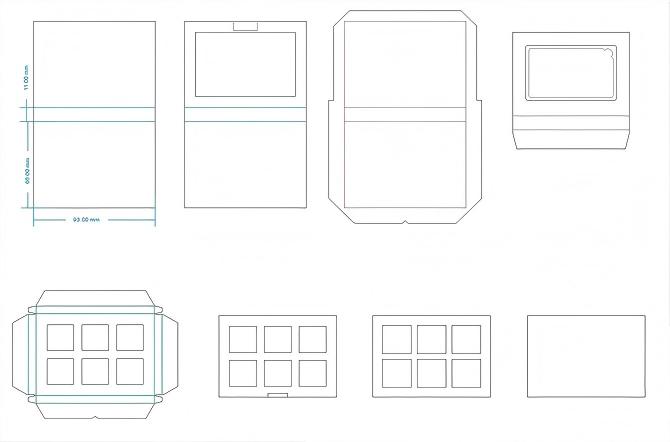
Different cosmetic products require different insert materials. The ideal choice depends on factors such as product weight, palette design, sustainability goals, and target market positioning.
| Insert Material | Key Features | Suitable Applications |
|---|---|---|
| Paperboard Insert | Lightweight, recyclable, cost-efficient, and suitable for sustainable packaging concepts | Eyeshadow palettes, blush palettes, and everyday cosmetic products |
| EVA Foam Insert | Provides cushioning and additional protection for fragile products | Luxury palettes and products requiring stronger impact resistance |
| PET Plastic Insert | Offers accurate positioning and stable support | Complex layouts with multiple pans or different product formats |
| Magnetic Support Structure | Supports removable pans and refillable packaging concepts | Professional makeup collections and reusable palettes |
Paperboard inserts are commonly chosen by brands that prioritize sustainability and lightweight packaging. They can be integrated with paper-based packaging structures while maintaining a clean appearance.
EVA foam inserts are suitable when additional cushioning is needed, especially for higher-value products. PET inserts provide stronger positioning accuracy and are often used for designs where multiple components need to stay perfectly aligned.
There is no single insert material that works for every makeup palette. The best solution depends on the product requirements, production goals, and customer experience expectations.
The size and layout of a makeup palette are major factors when designing an insert. A small travel-size palette and a professional multi-color palette have completely different structural requirements.
The number of pans, pan diameter, product arrangement, and palette thickness all influence the insert design. For example, a palette containing multiple eyeshadow shades requires accurate positioning for each pan, while a compact blush palette may require a simpler but lightweight structure.
Brands should also consider whether the palette includes only one product category or combines several cosmetics, such as eyeshadow, contour, blush, and highlighter. Mixed-product designs usually require more customized internal structures because each product may have different dimensions and weight distribution.
During the development process, packaging engineers evaluate the product size, internal space, and user experience together. This ensures the insert provides enough support without increasing unnecessary material usage or packaging costs.
International shipping creates additional challenges for cosmetic packaging. Products may travel long distances through different transportation environments, making internal protection a critical consideration.
A properly designed insert prevents makeup pans from moving inside the package by creating a secure fitting structure. Accurate dimensions are important because excessive space can cause movement, while an overly tight structure may create pressure on the product.
Material strength, insert thickness, adhesive performance, and overall packaging construction all contribute to transportation safety. For pressed powders and fragile cosmetic products, additional cushioning or stronger support structures may be required.
A professional packaging manufacturer can evaluate potential risks during the design stage and recommend suitable solutions before mass production. This helps brands reduce product damage, improve customer satisfaction, and maintain consistent packaging quality.
At Colorich Packaging, packaging design combines structural development, material selection, printing, and manufacturing expertise to help beauty brands create reliable and attractive packaging solutions. If you need support with packaging development, you can contact Colorich Packaging for professional assistance.
Selecting the right insert requires balancing product protection, appearance, cost, and brand requirements. Before production begins, cosmetic brands should evaluate several important factors.
| Factor | Why It Matters |
|---|---|
| Product Type | Different cosmetics require different levels of support and protection |
| Palette Structure | The number and arrangement of pans affect insert complexity |
| Material Requirements | Material choice influences durability, appearance, and sustainability |
| Shipping Conditions | Long-distance transportation requires suitable protection design |
| Brand Positioning | Luxury and mass-market products may require different packaging approaches |
Working with an experienced packaging partner allows brands to develop inserts that match their products instead of relying on standard solutions. From prototype testing to final production, professional guidance can improve packaging performance and reduce potential quality issues.
The insert is a key component of successful makeup palette packaging design. It protects cosmetic products, improves presentation, and supports a better customer experience. From material selection to structural design, every detail should be considered based on product requirements and brand goals.
For beauty brands seeking reliable packaging solutions, Colorich Packaging provides customized design and manufacturing services to help create packaging that combines protection, functionality, and premium appearance. With professional structural expertise and production capabilities, Colorich helps brands transform packaging ideas into finished products.
An insert keeps makeup pans secure, prevents movement during transportation, and improves the overall packaging experience.
Paperboard inserts are commonly selected for sustainable packaging because they are lightweight and recyclable.
Yes. Inserts can be customized according to palette size, pan layout, product type, and brand requirements.
A properly designed insert provides accurate positioning and support, helping prevent cracks, movement, and transportation damage.

Hey,I'm Rachel Liao,the sales manager of Colorich Packaging.
With solid professional skills and acute market insight, focus on providing customers with customized packaging solutions and supply chain optimization services.
●Packaging demand analysis and solution design
●Customer development and long-term relationship maintenance
●Cost optimization and sustainable packaging practices

 en
en  English
  日本語
日本語  한국어
한국어  français
  Deutsch
  Español
  italiano
  русский
  português
  العربية