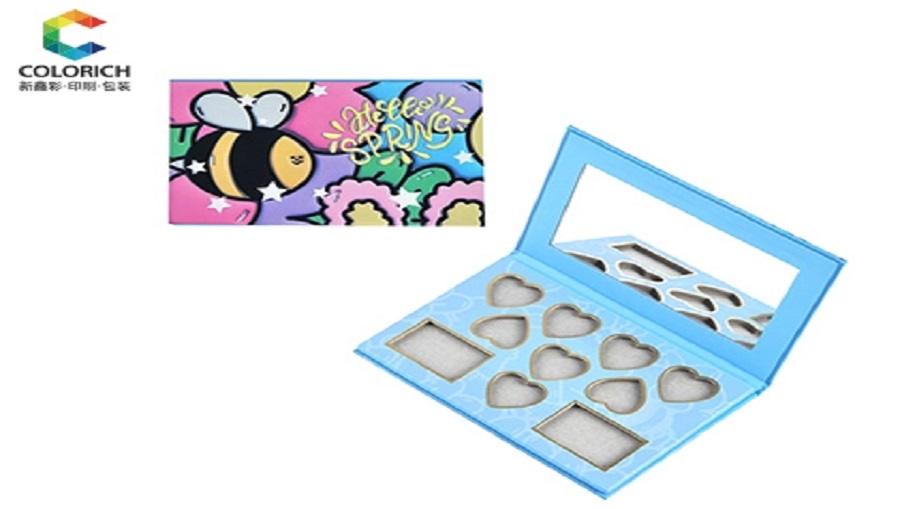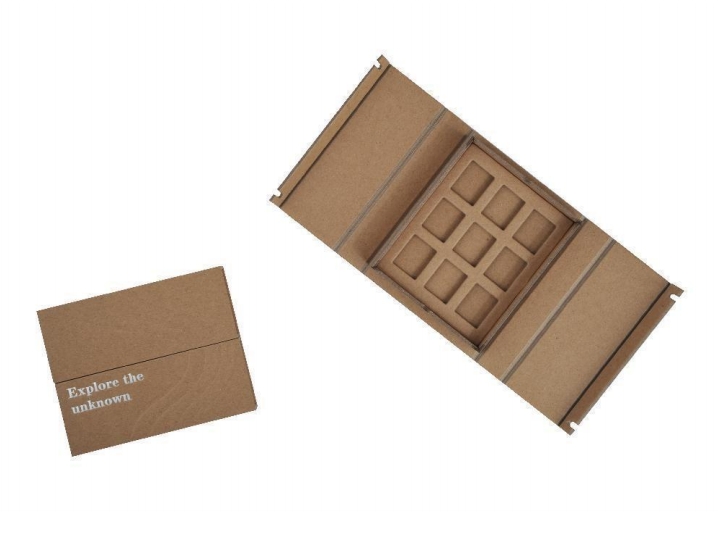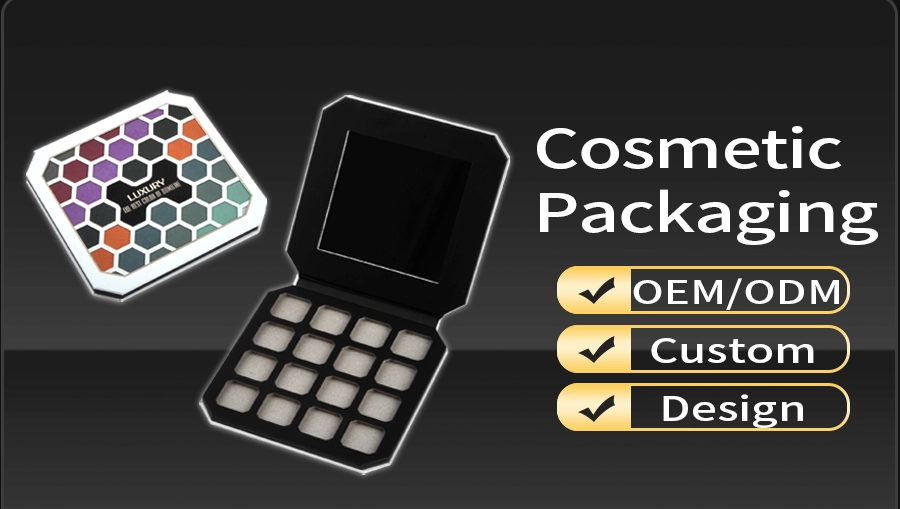

The classic lid-and-base rigid box is safe — but it is also everywhere. Walk through any department store gift section or scroll through any premium beauty e-commerce page and the same format repeats: lift the lid, find the product. For brands investing in gift sets and collections, this ubiquity is a problem. A makeup packaging box that delivers a memorable opening experience communicates uniqueness at first touch — before the consumer has even seen the product inside. That is where structures like drawer boxes, magnetic flip-top designs, and eyeshadow sleeve packaging become strategic tools rather than aesthetic choices: they upgrade the unboxing moment, reduce commodity packaging perception, and help premium sets justify their price point.
The challenge is engineering these structures to perform in the real world — protecting heavier combinations like glass perfume bottles and metal lipstick tubes through transit, retail handling, and the consumer's first open.
The moment a consumer interacts with a gift box is a brand communication moment. A standard lid-and-base box communicates nothing beyond "this is a box." A drawer that slides open with controlled resistance, a magnetic flip-top that snaps shut with a satisfying click, or a sleeve that reveals a second layer of branding as it is removed — each of these creates a micro-experience that signals intentionality and quality before the product is even visible.
For gift sets positioned at premium price points, this first-touch experience is not a luxury — it is a justification. Consumers and gift-givers are paying for the feeling of giving something special, and the packaging is the first evidence that the price was worth it.
Innovative structures must still pass real-world handling requirements. A drawer box that allows the insert to shift during transit, or a magnetic box whose corners crush under compression in a master carton, fails the brand regardless of how beautiful it looks in a studio photo. For gift sets containing glass perfume bottles and metal lipstick tubes — items with different weights, shapes, and fragility profiles — the structural engineering of the insert is as important as the opening mechanic.
Explore Colorich makeup packaging box structures and configurations
The following comparison covers the three primary alternative structures and where each performs best:
| Structure | Best Application | Key Engineering Requirement | QC Priority |
|---|---|---|---|
| Drawer box (slide-open) | Multi-item sets, layered reveals, premium gifting | Rail tolerance, pull ribbon strength, drawer stop to prevent drop-out | Drawer friction consistency, insert fit |
| Magnetic flip-top | Luxury positioning, repeat open/close use, collectible sets | Magnet size and grade, closure alignment, corner reinforcement | Magnet placement tolerance, closure snap force |
| Hexagon or round box | Seasonal collections, display impact, limited editions | Die-line complexity, wrap control, alignment at seams | Seam alignment, wrap tension uniformity |
The drawer box creates a reveal mechanic that feels deliberate and premium. The outer shell carries the primary branding; the inner drawer slides out to present the products. The engineering requirements are tighter than a standard box: the rail tolerance between the drawer and the outer shell determines the friction feel — too loose and the drawer drops out; too tight and it requires force that feels cheap. A pull ribbon adds both functionality and a luxury signal. The drawer stop prevents the inner box from sliding completely out and dropping the contents.
The magnetic flip-top has become the reference format for luxury cosmetics gifting because it combines a clean exterior with a satisfying open-and-close mechanic that consumers associate with high-end products. The magnet specification — size, grade, and placement — determines the snap force and alignment. Misaligned magnets create a closure that feels off-center; undersized magnets create a closure that opens too easily in a bag or during transit. Corner reinforcement is critical because the flip-top hinge area concentrates stress during repeated opening.
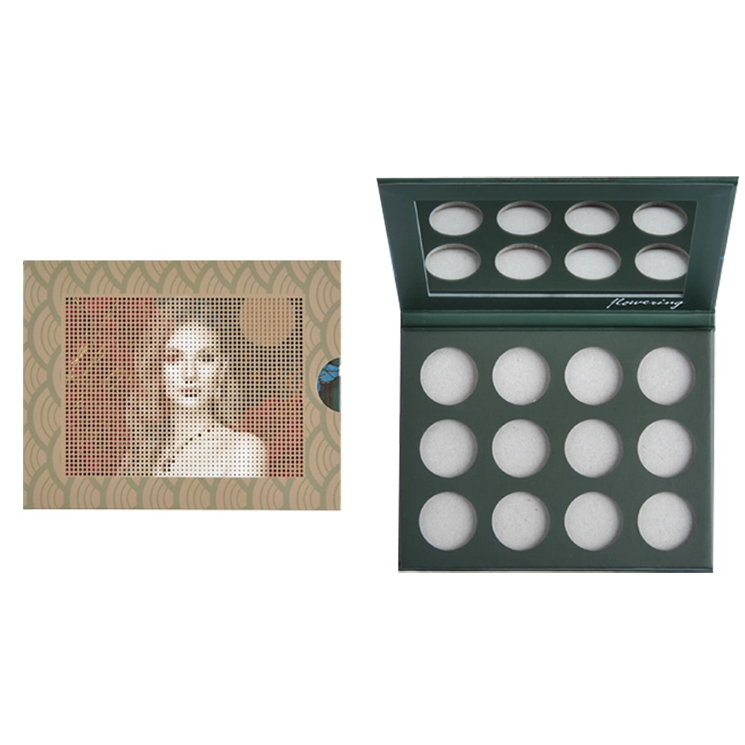
Eyeshadow sleeve packaging adds a secondary stage to any inner box format: the outer sleeve carries the primary branding and can be changed for different markets, seasons, or languages without modifying the inner box. This makes sleeve systems particularly valuable for brands selling across multiple markets with different language requirements, or for seasonal collections where the inner box is reused with a new outer sleeve. The sleeve also adds a layer of surface protection for the inner box finish and can serve as tamper evidence.
For eyeshadow palette packaging applications, the sleeve format is especially effective: Eyeshadow Palette Packaging with Sleeve Options
The insert is the component that determines whether the gift set arrives intact. For sets combining a glass perfume bottle and metal lipstick tubes — items with significantly different weights and center-of-gravity profiles — the insert must control each item independently and prevent any movement during the drop and compression events that occur in transit.
| Insert Type | Best For | Weight Capacity | Aesthetic Integration | Cost Level |
|---|---|---|---|---|
| EVA foam | Glass perfume, premium sets, tight tolerances | High — excellent hold for heavy items | Premium — can be covered in fabric or paper | Higher |
| Vacuum-formed blister tray | High-volume production, precise positional control | Medium to high | Functional — requires design attention to avoid clinical appearance | Medium |
| Paperboard insert | Eco-positioned brands, lighter items, cost-sensitive programs | Lower — suitable for lipstick and lighter items | Good — integrates naturally with paper-based packaging | Lower |
For a set containing a glass perfume bottle (typically the heaviest item) and one or more lipstick tubes, the insert design should follow these principles:
Position the heaviest item at the center or base of the set to lower the center of gravity and reduce tipping risk
Design each cavity to the exact dimensions of the item it holds — headspace allows movement that creates impact damage
Add corner and edge protection at the areas where drop energy concentrates — typically the bottom corners of the outer box
Define shake test and drop test acceptance criteria before mass production: specify drop height, orientation, and the maximum acceptable movement of any item within the insert after the test
Before any structure is specified, map every item in the set:
Bottle shape and maximum diameter (including cap)
Lipstick mechanism height in both closed and open positions
Weight of each item
Any accessories (applicators, cards, samples) that need to be accommodated
This map determines the minimum internal dimensions of the box and the insert cavity layout. Errors at this stage create insert fit problems that require expensive tooling changes after sampling.
| Box Structure | Packing Complexity | Line Speed Impact | Notes |
|---|---|---|---|
| Lid-and-base | Low | Minimal | Fastest to pack; least distinctive |
| Drawer box with sleeve | Medium | Moderate reduction | Sleeve application adds a step |
| Magnetic flip-top | Low to medium | Minimal | Insert placement is the primary variable |
| Hexagon or round | Medium to high | Moderate reduction | Non-standard shape requires adapted packing jigs |
Soft-touch lamination, foil stamping, embossing, and spot UV all require verification of rub resistance and fingerprint visibility before production approval. Sleeve-based systems offer a practical solution for multilingual compliance requirements: the inner box carries the brand design, and the outer sleeve carries the market-specific regulatory text, barcodes, and warnings — allowing the same inner box to be used across markets with different labeling requirements.
Request dielines, 3D mockups, and a golden sample sign-off process that covers magnet alignment, insert fit, drawer friction, and closure alignment before production is released. Changes after golden sample approval are expensive; changes after bulk production has started are very expensive.
| TCO Component | Cost Driver | Control Lever |
|---|---|---|
| Damage rate | Insert movement, corner crushing, surface scratching | Drop test validation, corner protection, carton spec |
| Assembly labor | Complex packing sequence, sleeve application | Work instructions, packing jigs, line training |
| Returns and rework | Insert fit failure, magnet misalignment, finish defects | Golden sample lock, in-process QC checkpoints |
| Inventory complexity | Multiple box types across SKUs | Sleeve system to reuse inner box across markets |
| Reorder consistency | Material substitution between batches | Retained golden sample, locked BOM |
The sleeve-based approach offers a specific inventory efficiency advantage: the same inner box can be used across multiple markets, seasons, or SKUs by changing only the outer sleeve. This reduces the number of unique box SKUs that need to be stocked and simplifies reorder management — the inner box is a stable component; the sleeve is the variable that carries market-specific or seasonal content.
If your brand's gift sets are still in standard lid-and-base boxes, differentiation is being left on the table. Drawer boxes, magnetic flip-top boxes, and geometric shapes create a signature unboxing experience that communicates premium positioning before the product is seen. Eyeshadow sleeve packaging adds flexible branding and market localization without requiring a new inner box for each market. The key to making these structures production-safe is engineering the insert — EVA, blister, or paperboard — around the actual weight, drop risk, and packing workflow of the specific set, so the packaging looks premium and arrives intact every time.
Explore innovative gift-set structures and submit your requirements for a tailored recommendation and quotation:
Makeup Packaging Box — View Structures and Request a Quote
To receive dieline suggestions, insert options, and pricing matched to your set composition and launch timeline, provide the following:
Work conditions: Sales channel (retail or e-commerce), shipping method and route, target unboxing style, and eco or sustainability requirements.
Quantity: Sample quantity, first order quantity, annual forecast, and launch deadline.
Size and spec: Products included in the set with each item's dimensions and weight, desired box type (drawer, magnetic, hexagon, round), sleeve requirement, and finishing preferences (foil, emboss, soft-touch, spot UV).
Target metrics: Drop-test requirement, maximum acceptable damage rate, assembly speed target, finish durability target, and budget range per unit.
Current problem: Current lid-and-base feels generic, insert movement during transit, corner crushing, slow packing line, or inconsistent appearance between batches.
1. What is a makeup packaging box for gift sets?
A makeup packaging box for gift sets is a structured outer package designed to present multiple cosmetic items together with protective inserts and a premium opening experience. It differs from single-product packaging in that it must accommodate items of different shapes, weights, and fragility profiles within a single structure, while delivering a cohesive brand presentation. The box structure, insert design, and finishing all contribute to the consumer's perception of the set's value.
2. How do drawer boxes and magnetic boxes compare with standard lid-and-base boxes?
Drawer and magnetic structures improve unboxing experience and perceived value, which supports premium pricing and gifting appeal. They typically require tighter manufacturing tolerances, more QC checkpoints, and sometimes slightly higher assembly time compared with lid-and-base formats. Lid-and-base is simpler, faster to pack, and often lower in unit cost, but it is less distinctive and provides fewer opportunities for brand storytelling through the opening mechanic. The right choice depends on the brand's positioning, price point, and the consumer experience the set is intended to deliver.
3. What is the ROI of upgrading to innovative structures or eyeshadow sleeve packaging?
ROI comes from multiple sources: higher perceived value supports higher retail price points and stronger gifting appeal; better shelf and unboxing impact reduces the need for additional marketing investment to communicate premium positioning; lower return rates when inserts are correctly engineered reduce replacement and customer service cost; and sleeve systems reduce inventory complexity by allowing one inner box to serve multiple markets. The ROI calculation should compare the incremental packaging cost against the margin improvement from higher pricing and the cost reduction from fewer returns and inventory SKUs.
4. Do we need to change our packing line to use these box structures?
Not always, but complex structures can change the packing sequence and speed. Drawer boxes with sleeves add an application step; magnetic boxes require careful insert placement to ensure closure alignment; geometric shapes may require adapted packing jigs. The most practical approach is to share your current packing process with the packaging supplier during the design phase so that the structure can be optimized for your line rather than requiring significant workflow changes. Work instructions and packing jigs for new structures are typically straightforward to implement.
5. What parameters should we provide for accurate design and quoting?
Provide the following: dimensions and weight of every item in the set, desired opening style (drawer, magnetic, sleeve, or combination), finish requirements (lamination type, foil, emboss, spot UV), target drop and shake performance criteria, order quantity and launch timeline, shipping method and destination market, and any market-specific labeling, language, or sustainability requirements. Complete information at the inquiry stage allows the supplier to recommend the correct structure, insert material, and carton configuration — and to provide a quotation that reflects the actual production and tooling requirements for your specific set composition.

Hey,I'm Rachel Liao,the sales manager of Colorich Packaging.
With solid professional skills and acute market insight, focus on providing customers with customized packaging solutions and supply chain optimization services.
●Packaging demand analysis and solution design
●Customer development and long-term relationship maintenance
●Cost optimization and sustainable packaging practices

 en
en  English
  日本語
日本語  한국어
한국어  français
  Deutsch
  Español
  italiano
  русский
  português
  العربية